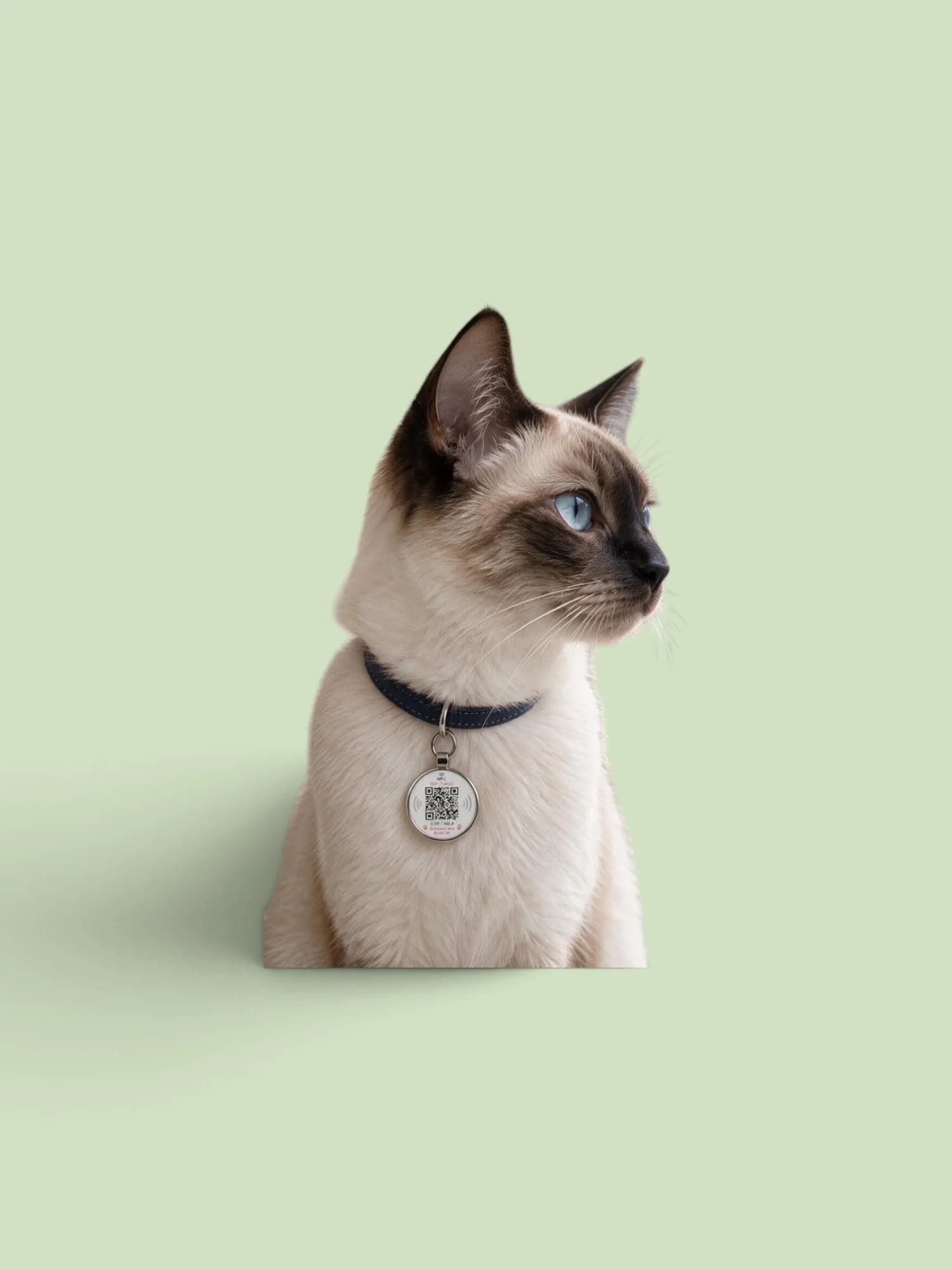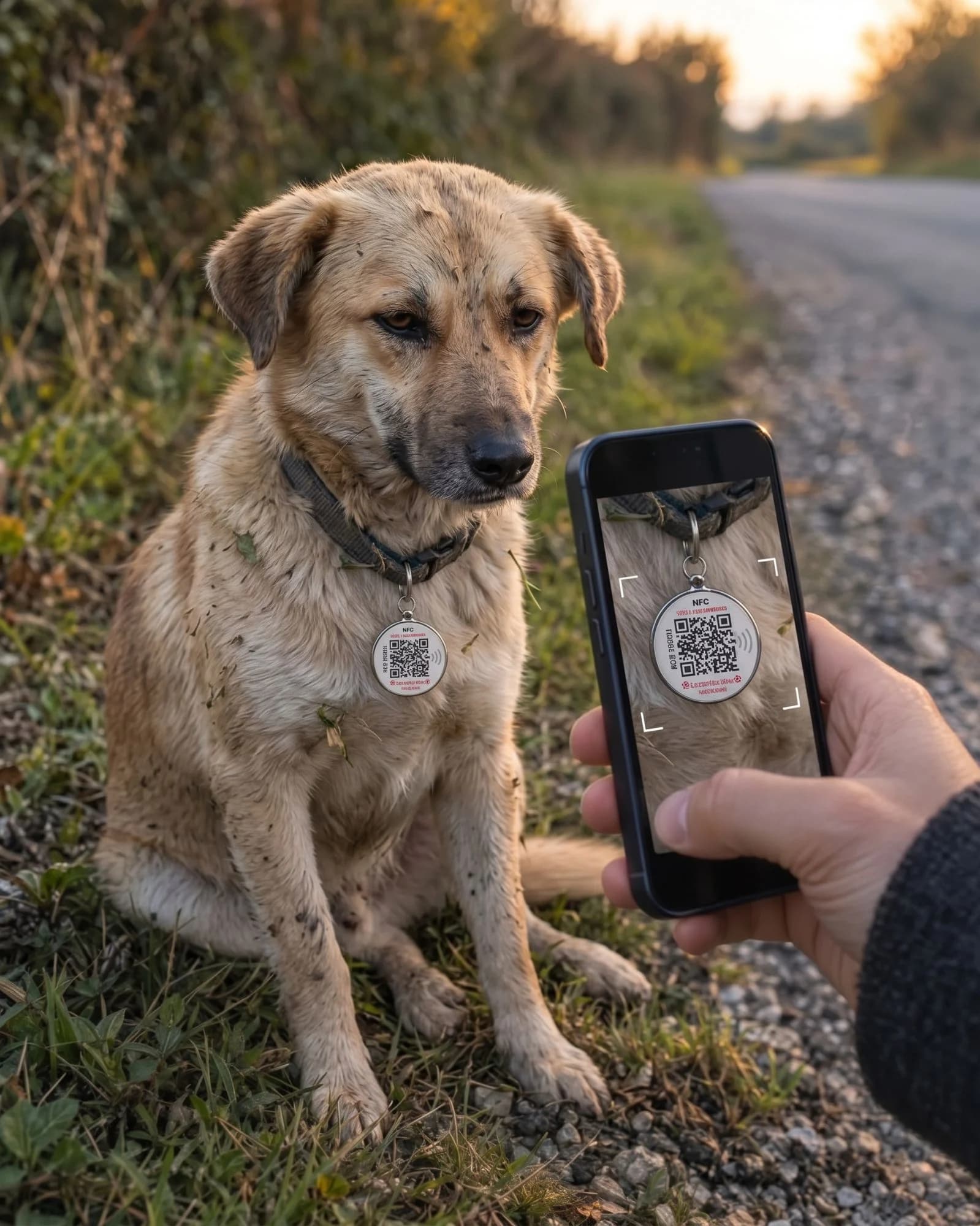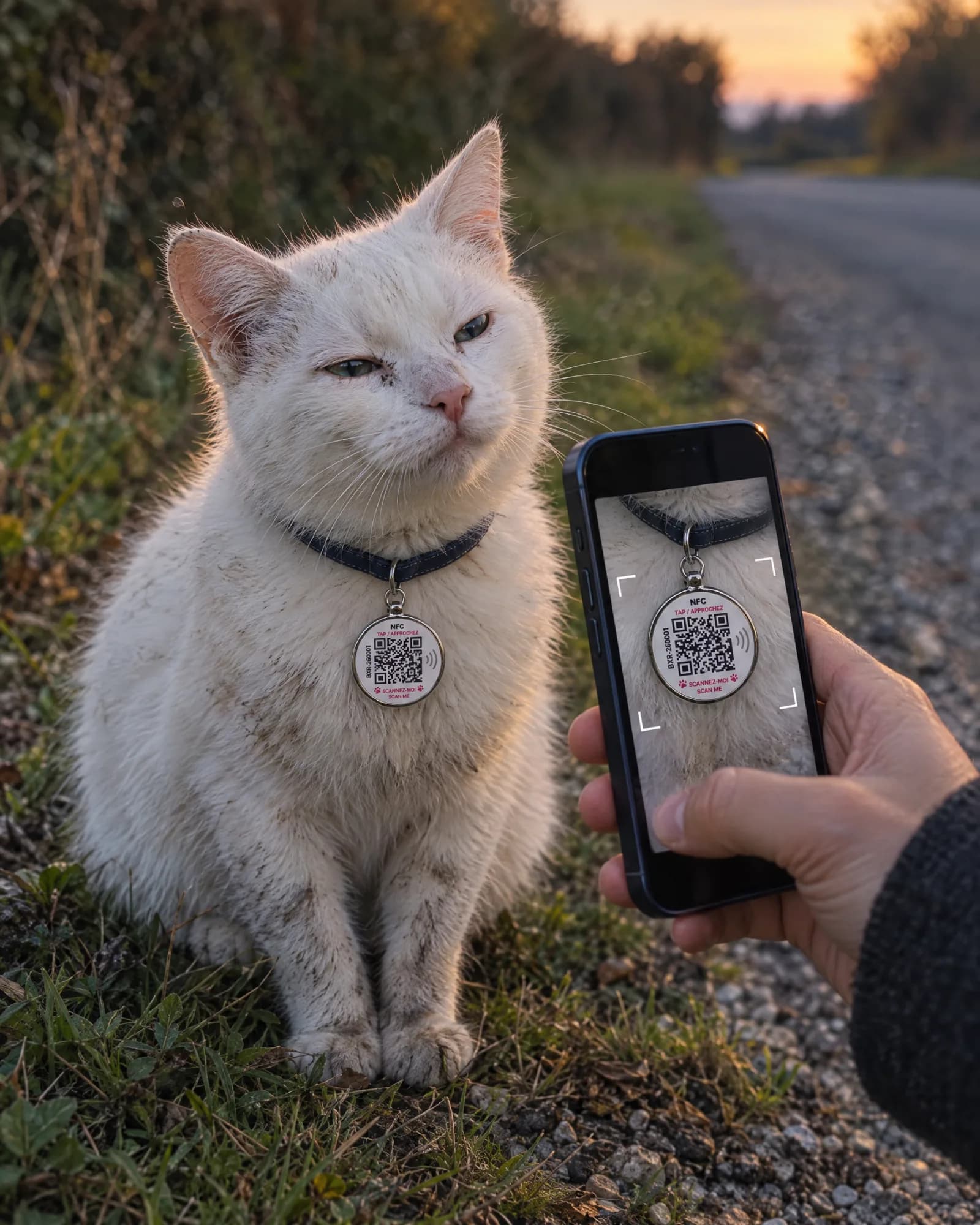

In brief
- Go back to where it went missing and call calmly, without running after it.
- Turn on its medallion’s lost mode and follow its GPS if it wears one.
- Report the loss on I-CAD and notify the town hall, pound and vets.
- Post a clear notice and be wary of requests for money.
A missing dog is an emergency you can organise. The first few minutes are for searching on the ground, the following hours for your network, the days after that for perseverance.
First few minutes
On the ground
- Back to where it went missing
- Call calmly, no chasing
- Medallion lost mode
- Live GPS position
First few hours
The network
- Methodical search of the area
- Loss report on I-CAD
- Town hall and pound
- Vet clinics
Following days
Perseverance
- Notices and local groups
- Posters with a QR code, generated from the app
- Visits at quiet times
- Up-to-date I-CAD contact details
In the first few minutes
Right now
0/5
Many dogs come back by themselves to where they left you. A dog that is chased moves further away: crouch down, call, let it come to you. If your dog wears a GPS, follow its position live rather than searching blindly.
Turn on lost mode
If it wears a Bixar medallion, turn on lost mode from the app: two questions, and the alert is live. The person who scans it immediately sees that it is being searched for, the place you specified and the buttons to reach you. If they report finding it, you are notified straight away, by notification and by email, with their location if they share it.
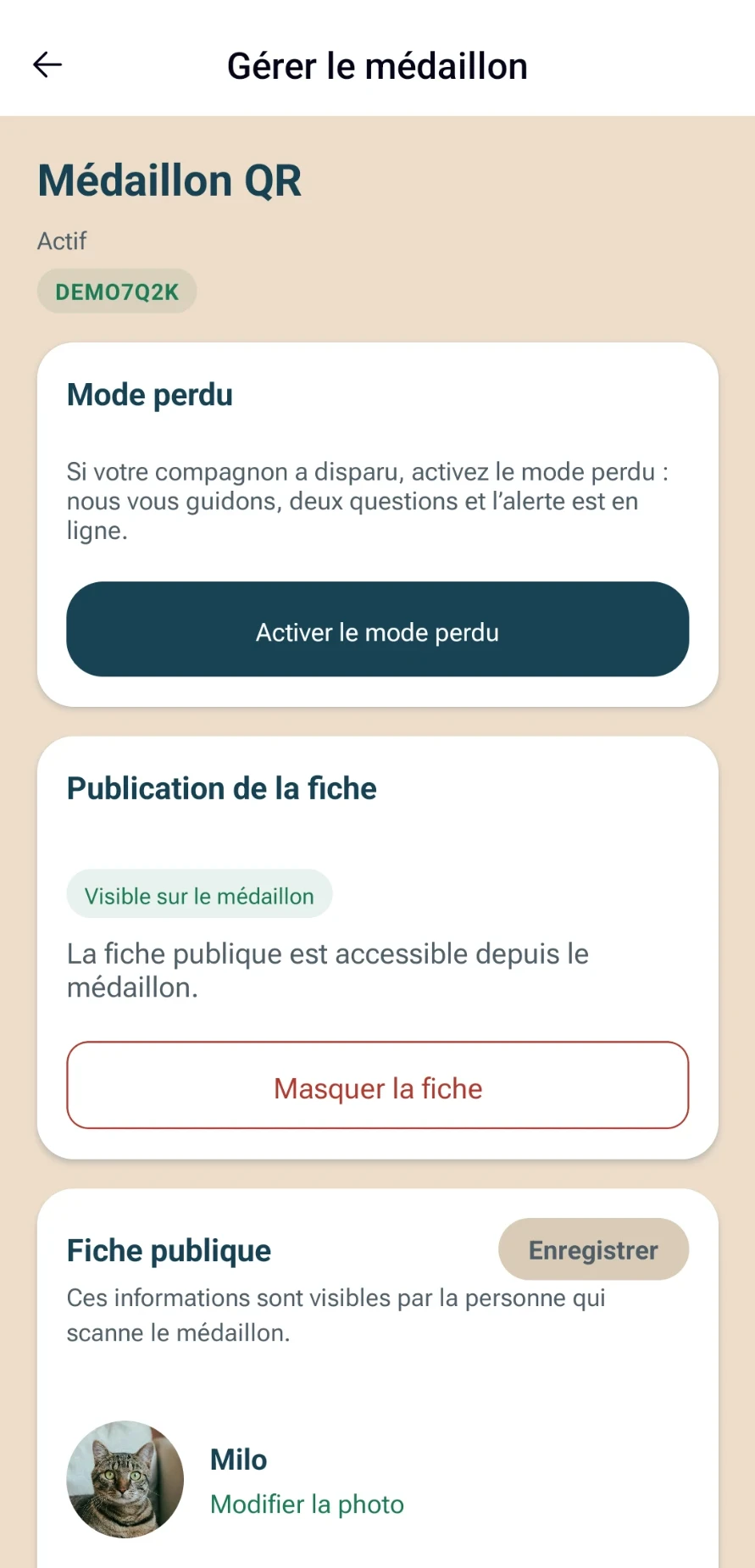
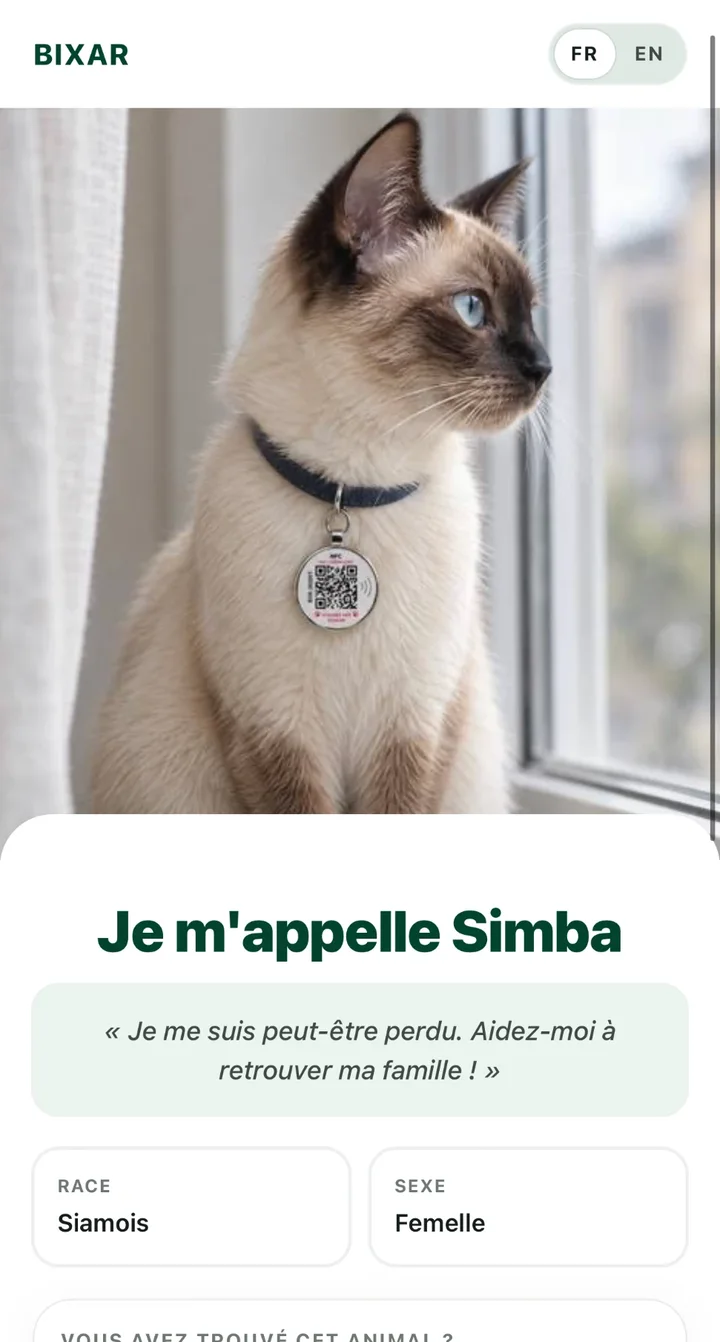
Normal profile
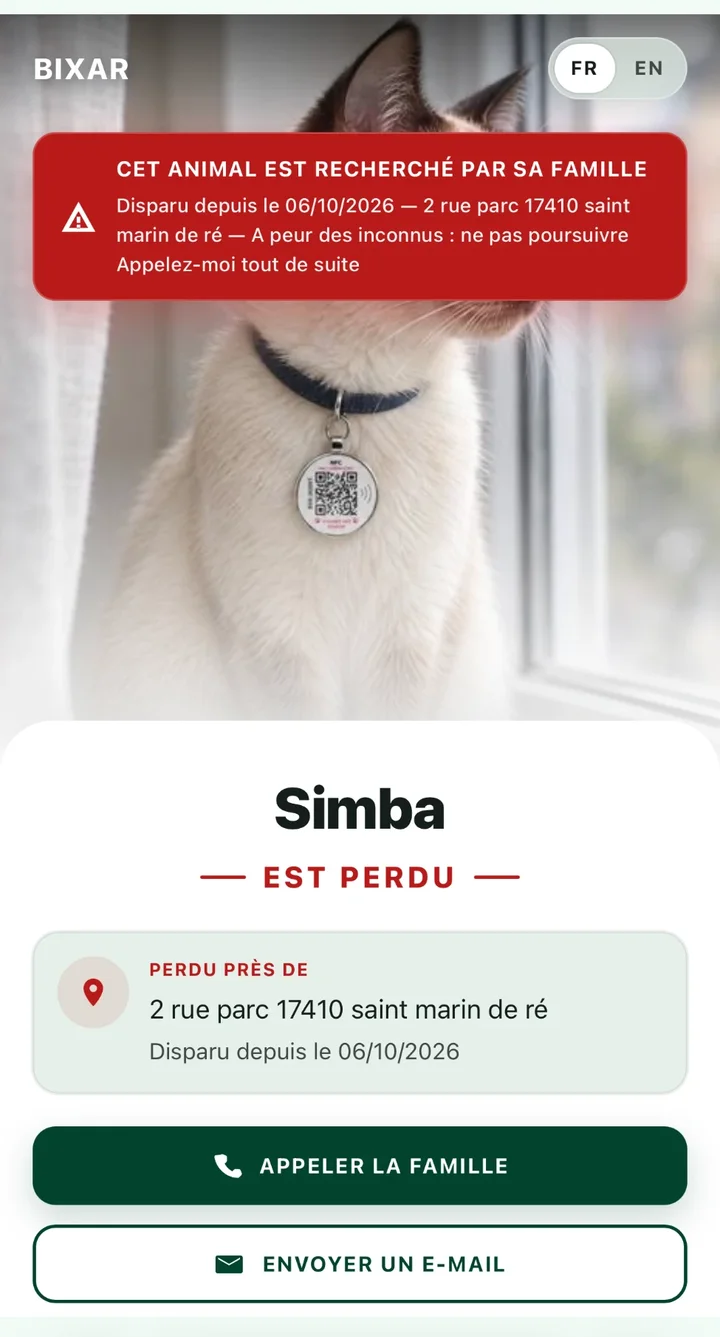
Lost mode on
In the first few hours
In the first few hours
0/4
Report the loss on I-CAD, the French national identification register for domestic carnivores (i-cad.fr). Identification by microchip or tattoo is mandatory in France, and it is through this register that a vet, a pound or the police will find you. The town hall and the pound take in animals found on public roads. Vet clinics often receive injured animals, and all of them can read the microchip.
In the days that follow
- Post a clear notice (recent photo, area, contact) in local groups and on pet alert platforms.
- Put up posters where people pass by: shops, bakeries, vet practices. With the Bixar medallion, the app generates the A4 poster and the social media image, with a QR code linking to its profile: see how to make an effective poster.
- Go back regularly to where it went missing, at quiet times (early morning, late evening).
- Keep your I-CAD report active and update it if you change your number.
Preventing the next escape
- Up-to-date identificationMicrochip or tattoo, up-to-date I-CAD contact details.
- A medallion anyone can readThe neighbour who finds it calls you straight away.
- Secure spacesGate, fence: most escapes happen there.
- A zone alertA GPS alerts you as soon as it leaves the garden.
The GPS helps you find your pet.
The medallion helps the person who found it find you.
Bookmark this page: people always read it too late. And if you are the one who finds a pet: what to do when you find a lost dog or cat.